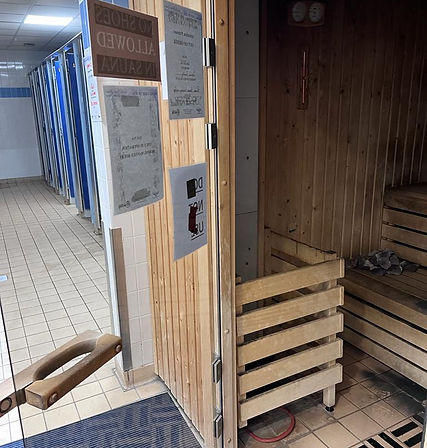
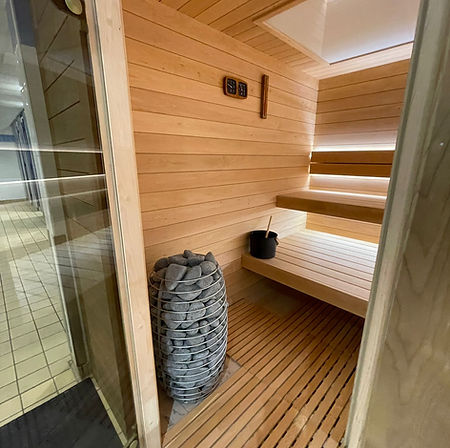
SAUNA RENOVATION

Commercial Sauna Refurbishment - Low Hanging Fruit
1. Ventilation — The Most Important Upgrade, Almost Always Overlooked
Older commercial saunas were typically built with passive ventilation — a low inlet vent and a high outlet vent, relying on natural convection. In a busy commercial setting this is genuinely inadequate. Multiple users exhaling in a confined space push CO2 levels up quickly, and passive venting can't keep pace.
With our proper refurbishment gets you:
-
Mechanical extract ventilation sized to the room volume and expected occupancy
-
Correctly positioned inlet (low, near heater) and outlet (opposite wall, mid-height) to create genuine cross-circulation rather than short-circuiting
-
Fresh air supply rather than recirculated building air — critical for a commercial environment
-
In some installations, a Saunum-style active air mixing unit that continuously circulates and refreshes the air volume
The difference in user experience is significant — a well-ventilated sauna feels fresher, cooler to breathe, and sessions last longer before discomfort sets in. For a commercial operator, longer comfortable sessions mean happier clients and better reviews.
2. The Heater — Efficiency, Safety and Experience
Commercial heaters from 10–20 years ago are almost certainly oversized, inefficient, and running on outdated control systems. The heater technology available now is in a different league.
We redesign with:
-
Correctly sized heater for the actual room volume — many old commercial saunas have heaters that are too large, which creates aggressive, dry, uncomfortable heat rather than the gentle, even warmth of a properly matched unit
-
High stone mass — more stones means more thermal mass, which means softer, more sustained Löyly when water is poured. Old commercial heaters often had minimal stone capacity
-
Modern safety distances — newer heater designs (HUUM HIVE, Harvia Virta, Harvia Senator) allow closer bench and wall placement, recovering usable floor space in smaller rooms
-
Underfloor or under-bench heater options — in compact commercial rooms, moving the heater out of the traditional corner position can dramatically improve layout and usable seating
-
Energy consumption — modern commercial heaters with proper insulation and controls use significantly less electricity for the same output. In a facility running a sauna 8–12 hours a day, this compounds into serious operational savings
3. Controls and Connectivity
Old commercial saunas typically have a basic on/off timer outside the door and a manual thermostat inside. This is clunky for operators and offers zero data.
Our modern commercial control systems have:
-
Remote monitoring and control — pre-heat the sauna from your phone or management system before opening, shut it down remotely at closing. Harvia Xenio and HUUM UKU both do this.
-
Programmable schedules — you can set the sauna to reach temperature 30 minutes before your first booking and power down automatically at end of day
-
Usage logging — know exactly how many hours the heater has run, useful for maintenance scheduling and energy auditing
-
Temperature and humidity monitoring — real-time data so you know the sauna is performing correctly before a client walks in
-
Safety interlocks — automatic shut-off if temperature exceeds limits, door sensor integration, occupancy timers
For a spa, gym or hotel, these aren't luxury features — they're operational necessities that reduce staff workload and eliminate the risk of a sauna being left running overnight.
4. Timber — The Visual and Functional Heart of the Refurbishment
This is where most commercial saunas show their age most visibly. Old Scandinavian pine goes dark, resinous and sticky over years of heat cycling. It looks tired, it smells musty, and in humid commercial environments it can harbour bacteria in the surface grain.
The new sauna interior will upgrade everything:
Cladding options:
-
Thermo Aspen — heat-treated for stability and a rich golden-brown tone. Odourless, non-resinous, hygienic. The standard premium choice for commercial refurbishment
-
Thermo Alder — slightly darker, very stable, excellent in high-humidity environments
-
Dark Thermo Alder or Thermo Pine — if the aesthetic calls for a darker, more dramatic interior
-
Abachi — extremely low density, stays cool to the touch even at high temperatures. Particularly good for commercial benches where skin contact is constant
Bench upgrades:
-
Minimum 28mm bench boards — thinner boards warp and split within months in a busy commercial environment
-
Consider ergonomic bench profiles — slightly rounded edges, wider boards — which are noticeably more comfortable for extended sessions and read as premium quality to clients
-
Two-tier bench configuration re-examined — many old commercial saunas have poorly positioned upper benches that put users' heads too close to the ceiling. A refurbishment is the opportunity to recalculate bench heights relative to the heater and ceiling for optimal temperature zoning
Ceiling:
-
Old commercial ceilings are often flat, which creates hot spots directly above the heater. A sloped or vaulted ceiling — even a gentle pitch — improves heat distribution and is a meaningful design upgrade
5. Insulation — The Hidden Performance Factor
Most older commercial saunas are inadequately insulated, particularly in the floor and around the door frame. Heat loss through floors and walls means the heater works harder, running costs are higher, and temperature recovery after the door opens is slower.
Modern refurbishment comes with following as standard:
-
Mineral wool insulation (not PIR foam, which off-gasses toxic fumes at sauna temperatures — a safety issue in older builds that is more common than it should be)
-
Proper vapour barrier — a continuous, correctly lapped foil vapour barrier on the warm side of all insulation. Gaps or tears in old vapour barriers allow moisture into the structure, causing timber rot and mould over time
-
Insulated door with a proper magnetic seal — old commercial sauna doors are often heavy, poorly sealed and thermally inefficient. A well-fitted modern door with a good seal makes a tangible difference to heat retention and temperature recovery
6. Lighting
Old commercial saunas typically have a single recessed fitting behind a timber guard. Functional, nothing more.
Modern lighting design for commercial saunas that we fit includes:
-
LED strip lighting under benches and behind headrests — creates a warm, ambient glow rather than harsh overhead light
-
Colour temperature matters — warm white (2700K) is the correct choice for sauna; cooler tones feel clinical and inappropriate
-
Dimmability — the ability to lower lighting intensity for a more immersive, restful experience is valued by clients and easy to implement at refurbishment stage
-
Salt wall or salt brick backlighting — if budget allows, even a single backlit Himalayan salt panel adds a visual focal point and a tangible wellness association that clients notice and talk about
7. The Door and Glass
The entrance to a sauna sets the tone before a client even steps inside.
Upgrades include:
-
Full glass door — transforms the experience of approaching the sauna. You can see the interior, the lighting, the timber. It reads as premium and inviting rather than institutional
-
Glass side panel — if the layout permits, a fixed glass panel beside the door brings in more light and makes smaller saunas feel significantly larger
-
Bronze or black-tinted glass — currently the most specified finish in premium commercial refurbishments. Warm, contemporary, distinctive
-
Proper door ergonomics — commercial sauna doors should open outward for safety and have a simple wooden handle inside. Surprisingly often wrong in older installations
8. Sauna Type Upgrade — Worth Considering at Refurbishment
If your existing sauna is a basic Finnish or traditional unit, a refurbishment is the moment to reconsider whether the type still suits your clientele and your offer.
Options worth evaluating:
-
Hybrid (IR + Finnish) — adds infrared capability to a traditional heater. Shorter warm-up time, accessible to clients who find high-heat Finnish saunas too intense, broader appeal
-
Saunum climate control integration — if the room size allows, adding a Saunum unit delivers a meaningfully better guest experience and allows salt therapy without structural salt wall work
-
Bio Combi (Sanarium) — lower temperature (50–60°C), higher humidity. Attractive to a wider audience including those with cardiovascular sensitivity who are advised against high-heat saunas. Many spas now run both a Finnish and a Bio sauna as complementary offerings
-
Salt integration — even without full salt walls, a Himalayan salt panel on one wall with LED backlighting transforms the aesthetic and adds a wellness narrative your marketing can use
What a Commercial Refurbishment Typically Costs
To be straight with you, a serious commercial refurbishment — full timber replacement, new heater, new controls, proper ventilation redesign, new door and glass, upgraded insulation and lighting — typically runs from £15,000 to £35,000 depending on the size of the room and the specification chosen.
That sounds significant, but consider it against the alternative: a new commercial sauna installation from scratch typically starts at £25,000 and rises sharply with size and specification. Refurbishment preserves the structural shell — which is usually still sound in a concrete or blockwork commercial build — and upgrades everything the client sees, touches and breathes.
The operational savings from a properly insulated, correctly controlled modern heater also compound meaningfully over 3–5 years in a facility running daily.
The Sauna Company Approach
When you have the refurbishment consultation with us, these are the questions we consider and base our design on:
-
Do we need to redesign the ventilation, or just replace the heater and timber?
-
What insulation specification we should use — and is the existing vapour barrier being replaced?
-
Is the heater being sized correctly for this room volume, or shall we uprate or lower the kW rating?